Low Carbon and Carbon Neutral Products
-
Do you know what makes Low Carbon and Carbon Neutral products different from standard products?

Our beef product comes from farms with no conversion of native ecosystems over the last 10 years.

Our partner farms have an Agroclimatic Plan, and our industries ensure the traceability of this product.

Our product comes from farms that adopt good land use practices in low-carbon cattle production systems.
-
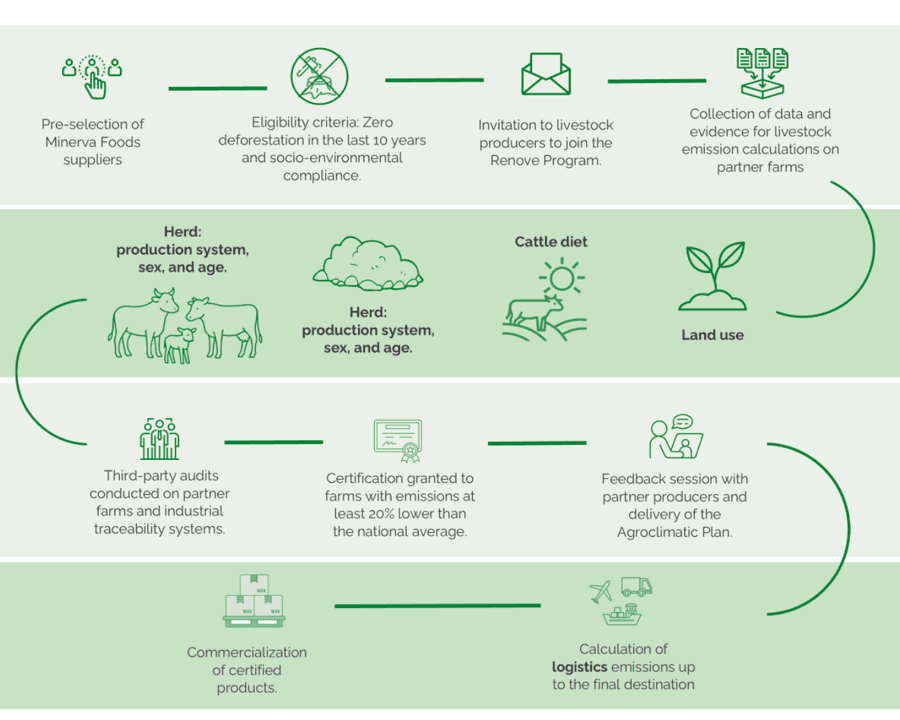
Low Carbon Protocol
-
Carbon Neutral Protocol
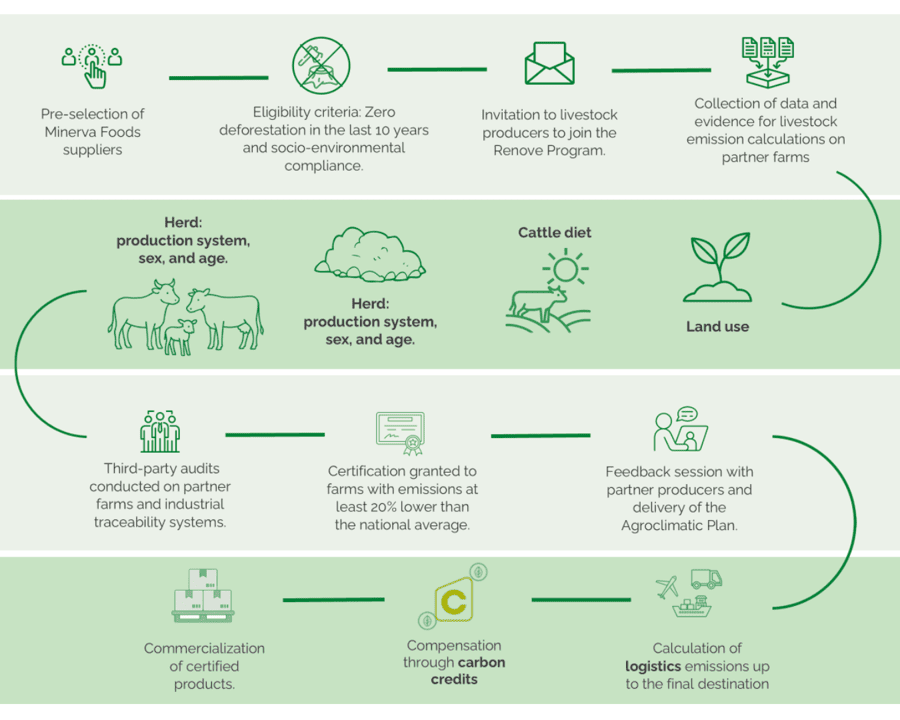
The participating farms in the Renove Program undergo a rigorous monitoring and verification process, ensuring zero deforestation, the adoption of good production practices, and emissions below the average of conventional livestock farming. All of these criteria are audited by an independent third party responsible for certifying the farms under the Low Carbon production standard.
With the Low Carbon attribute, customers may also choose to offset residual emissions through carbon credits, neutralizing the product’s emissions and qualifying for the use of the Carbon Neutral label, available exclusively in the Zero Carbon Impact – Responsible Sourcing product line.
Production certified under the Low Carbon or Carbon Neutral attributes extends throughout our company’s entire value chain, covering not only beef, but also leather, meat and bone meal, and our other businesses, reinforcing an integrated and responsible approach across all operations.-
How can we reduce emissions on farms?
The Renove Program was created in 2021 to promote collaboration with partners and farmers in order to drive sustainable, profitable, and low-carbon livestock production.
Its mission is to support the livestock supply chain in increasing productivity while promoting the reduction and removal of greenhouse gases and generating social, environmental, and climate benefits.
The way farms are managed and maintained can have an impact on their carbon footprint. Therefore, improved management decisions and production strategies can reduce emissions or even remove CO₂ from the atmosphere.
Here are some of the strategies we are strengthening through the Renove Program:– Planned pasture management:
Healthy pastures and soils act as carbon reservoirs: pastures grow better and can remove more carbon from the atmosphere through photosynthesis and the storage of this carbon in the soil.
With more productive and well-managed pastures, animals eat more and better, improving animal productivity while reducing slaughter age and the associated methane emissions.– Rotational grazing:
Rotational grazing allows animals to feed without compromising forage quality, giving plants time to develop new leaves and thereby contributing to more efficient CO₂ storage in the soil.– Implementation of integrated systems, such as Crop-Livestock-Forestry Integration (CLFI):
The implementation of integrated systems such as CLFI promotes synergy between agriculture, livestock, and forestry, generating mutually beneficial results for all components of the system.– Increased animal productivity through improved genetics:
Improved genetics promote animals that grow faster and emit less methane throughout their lifetime.– Strategic diet to reduce enteric methane:
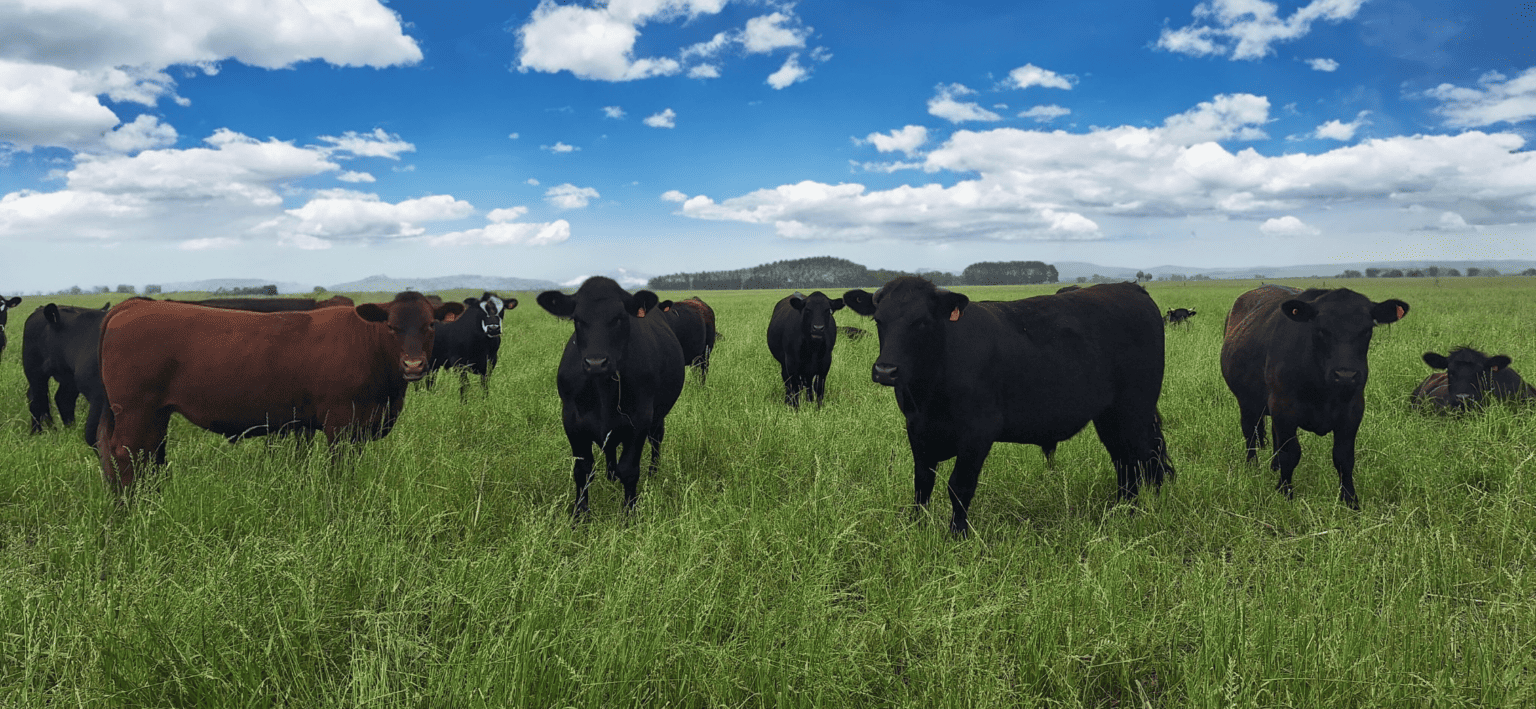
A proper and balanced diet, together with feed additives, can reduce methane emissions.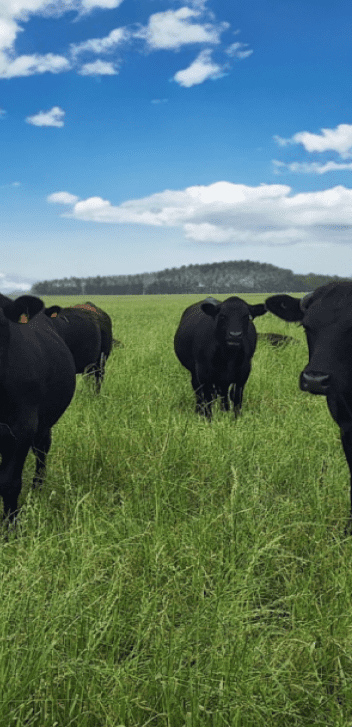
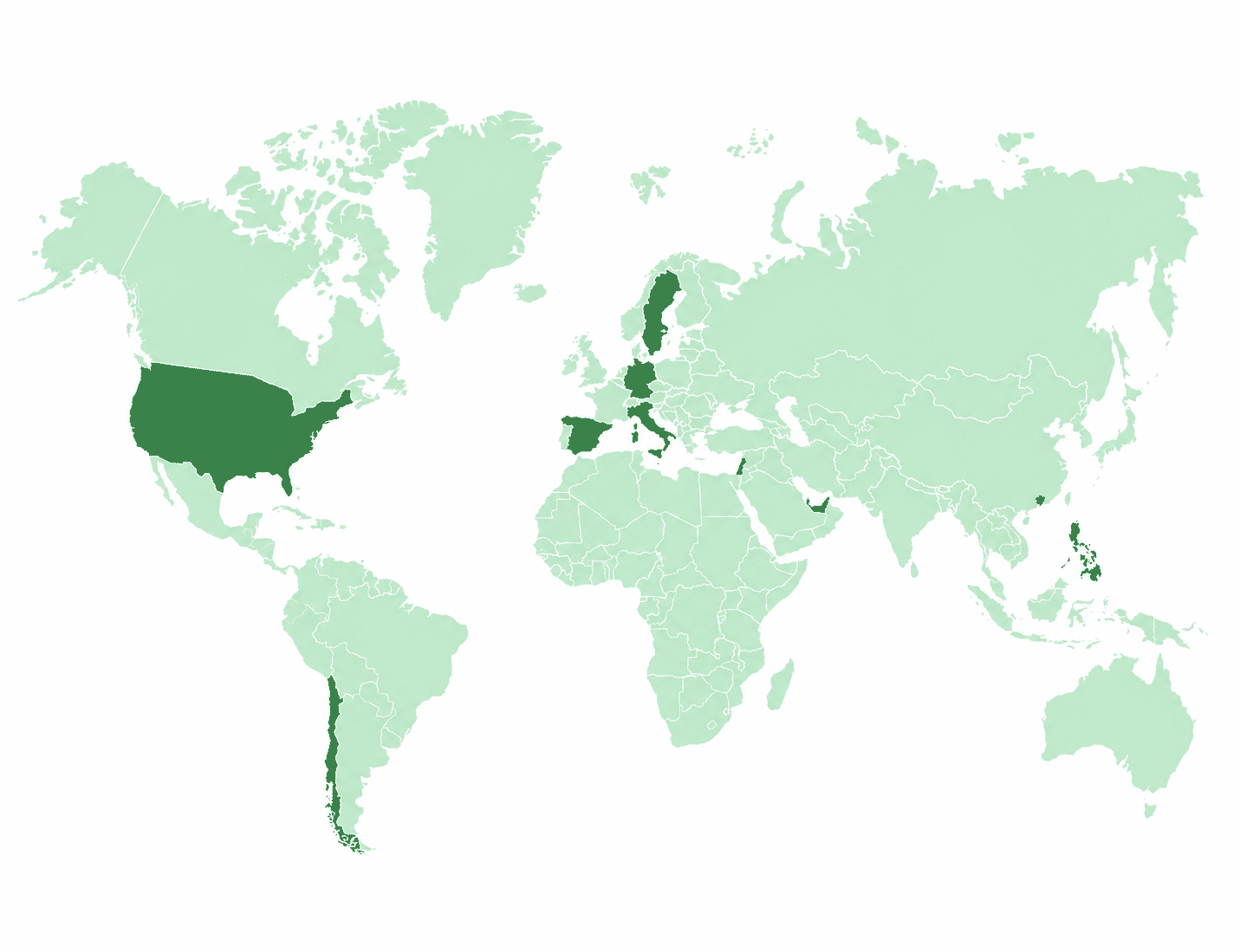
Low Carbon and Carbon Neutral are already present in:
 F.A.Q.
-
Frequently Asked Questions
A livestock production system is considered carbon neutral when the total greenhouse gas (GHG) emissions generated by farm operations, industrial processing, and logistics are fully offset through regenerative soil practices or the use of carbon credits.
The animals are raised on farms that adopt different cattle management and production systems, including extensive, semi-intensive, and intensive systems.
No. Minerva Foods has made public sustainability commitments with the goal of achieving net zero emissions by 2035. To achieve these results, the Company uses one of the best socio-environmental monitoring technologies available, develops projects and partnerships supported by technical and scientific expertise, and continuously drives innovation in the sector through a highly qualified team of specialists.
No. Our partner farms are selected according to rigorous compliance and socio-environmental monitoring standards. In addition, the product comes from farms and processing facilities that are audited annually by an independent organization, which requires evidence of no deforestation over the last 10 years, as well as the implementation of an Agroclimatic Plan.
Yes. At the processing facility, animals from audited farms are tracked from the moment they arrive. The beef is identified throughout the entire production process, and internal traceability is also audited by FoodChainID.
No. Low Carbon and Carbon Neutral products follow the same food safety and quality criteria as other Minerva Foods product lines and are produced under the most rigorous certifications available on the market.
Low Carbon and Carbon Neutral products originate in Brazil, Uruguay, and Paraguay and come from selected partner farms and processing facilities.
The carbon credits come from forest conservation or tree planting projects that are certified by an independent third party following scientific methodologies with high standards of rigor.
Contact us
Would you like to learn more about Minerva Foods products? Contact us by phone or send us a message.
-


